
The Henrouille Household
Journey to the End of the NightThis flow traces the Henrouille family’s fear, greed, and violence as they seek to dispose of an inconvenient older woman.
increasing Bearing strength in each event
 decreasing
Bearing strength in each eventdecreasingA Lifetime of Saving
A Lifetime of Saving
The paid-off house
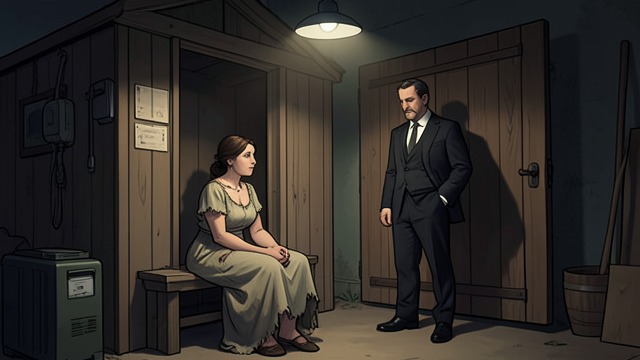
Jules Henrouille and Madame Henrouille have devoted decades to acquiring their home. Their savings habits have become a governing principle rather than a route to security.
An old woman at the margins
Grandma Henrouille lives separately in a shed while the couple keeps control of her pension. The household treats her as both a burden and a financial complication.
The Commitment Scheme
The Commitment Scheme
A convenient diagnosis
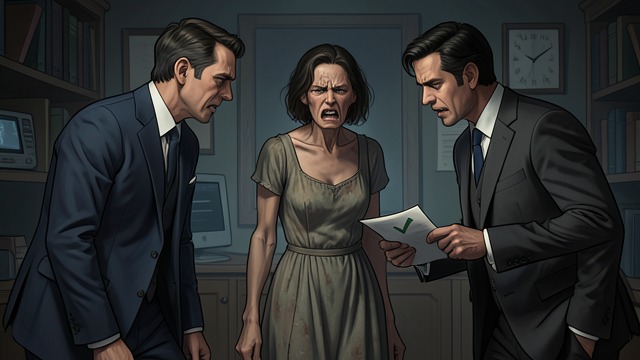
The younger couple asks Bardamu to certify Grandma Henrouille as insane and place her in an institution. They present the plan as care while discussing the value of renting her space.
Refusal and exposure
Grandma Henrouille recognizes the plan and denounces them. Her resistance frustrates Bardamu’s chance to earn a large fee and reveals the family’s motives.
The Rabbit-Hutch Plot

The Rabbit-Hutch Plot
Murder for hire
Robinson accepts payment to construct a booby-trapped rabbit hutch intended to kill Grandma Henrouille. The younger couple’s fear of expense becomes a willingness to arrange murder.
The trap misfires
The device explodes in Robinson’s face instead, blinding him. Grandma Henrouille survives and gains leverage over the people who tried to eliminate her.
The Toulouse Crypt
The Toulouse Crypt
A new livelihood
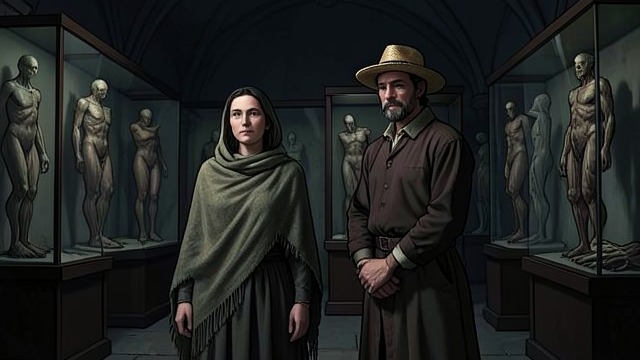
Robinson and Grandma Henrouille move to Toulouse and earn money exhibiting mummies in a church crypt. The scheme transforms an earlier domestic crisis into a precarious business.
Uneasy dependence
Grandma controls the enterprise while Robinson complains about his share and longs to escape. Their practical arrangement cannot restore trust or contentment.
Death in the Crypt
Death in the Crypt
A second murder
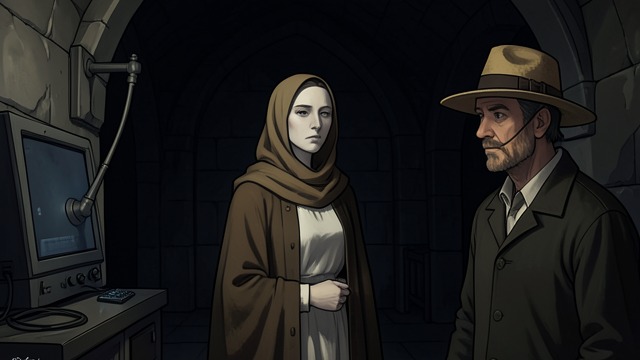
Robinson later admits that he caused Grandma Henrouille’s fall down the crypt stairs. Abbé Protiste reports her death as an accident, and Bardamu understands the implication.
A fragile cover story
The death is accepted publicly because Robinson had been presumed blind. Bardamu avoids disclosing what he knows, extending the chain of silence and complicity.
Before Bardamu’s first visit to the household
During Bardamu’s early Rancy practice
After Robinson becomes close to the family
After Robinson’s injury and the family’s relocation
After Robinson regains some sight in Toulouse
